Lawn Mowers


Trouble Shooting Lawn Mower Starter Problems

March 7th, 2012 admin Posted in maintenance No Comments »

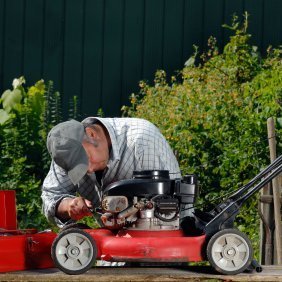
It is always a good idea to keep your lawn mower tuned up and ready to go for the summer lawn cutting season, but sometimes they just will not start and you need to know what to do before calling for expensive repairs or just chucking it and buying a new one. There are 4 or 5 steps to take before you raise the flag so to speak and call in someone to help.

Of course if you are handy then you can take it a lot further, but for now we will settle for these simple steps to get your lawn mower started.

  • Check the Choke and Throttle
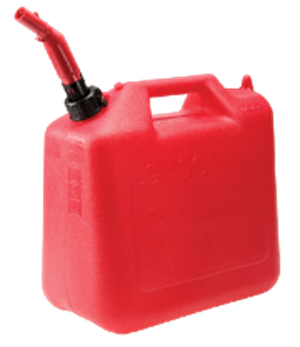
  • Make sure there is Gasoline in the Tank
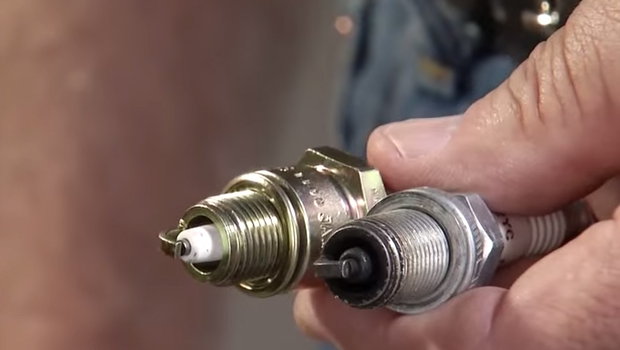
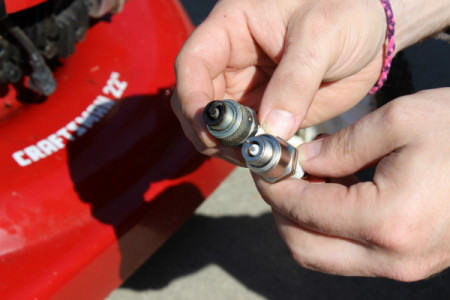
  • Clean Your Spark Plugs
  • Clean the Carburetor
  • Change or Clean the Air and Fuel filters
  • Call a Mechanic or a Good Friend

Check the Choke and Throttle

Most lawn mowers have a choke and throttle which must be in specific positions depending on whether the engine is hot or cold. Check your manual and make sure they are in the right position when you are trying to start the engine. Some of the newer lawn mowers have chokes that are automatic so all you need to do is make sure the throttle is in the right position. Pretty easy for most people.
Make sure there is Gasoline in the Tank

You might laugh at this one. Who would not make sure that there is gasoline in the engine. Well it happens more often than you might imagine.  I have worked around lawn mowers for many years and it has even happened to me. In my case I never checked the lawn mower after finishing the lawn one day. Apparently the gas tank was empty and so next time it started and only ran for a minute or two. It took me about five minutes to figure out that I should check the gas tank to make sure there was gas in it. Some people get as far as taking their lawn mower to a mechanic only to find out that all it needed was gas in the gas tank. So make sure that there is gas in the tank.

Clean Your Spark Plugs

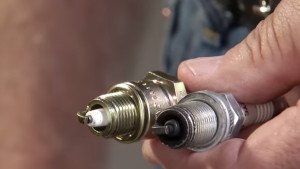
If your lawn mower is a few years old or even older, spark plugs will get dirty and corroded. Sometimes they get so bad that the corrosion stops the spark from igniting. If you cannot get your lawn mower to run, take out the spark plug, clean it up, file the metal contacts a little bit so there is shiny metal showing and re-gap it. If you are up to it make sure that there is a spark.

Put on a pair of gloves, make sure the spark plug wire is connected and hold the spark plug engine end against a meal object. Make sure sure there is no gasoline around that could accidentally be ignited. Crank the engine slowly and you should see a spark between the two electrodes. If you are not holding it right, you could also get a good shock!

Clean the Carburetor

This may not be for everyone, however if your carburetor is dirty or gummed up from  old gasoline left over winter, you will need to clean the carburetor. Check your manual for the proper procedure and then reset all of the settings for the lawn mowers carburetor.

Change or Clean the Air and Fuel filters

Sometimes it is very dusty when you are cutting the lawn and the filters can get dirty preventing the engine from running smoothly. It is a simple matter, following your instruction book, to change the filters so that your engine is getting sufficient air and clean gasoline. Most engines will run with dirty filters, but they may sputter or back fire occasionally and they will run rough. This could be one of the reasons!

Call a Mechanic or a Good Friend

If none of the above worked for you, it might be time to call in a professional mechanic, or a good friend who knows their way around a lawn mowers engine. While you are at it, make sure they change the oil in the engine as well. Always ask for an estimate of the repairs to make sure there are no surprises. If they are high, you may want to consider buying a new lawn mower instead of getting expensive repairs completed.

Our next post is going to discuss whether it is cheaper to buy a new mower or get your old one repaired. Man perfectly good lawn mowers are being thrown out because the cost to repair them is just too high. check out next weeks post, “Repairing Your lawn Mower vs Buying New”, if you would like more information on this subject.

AddThis Social Bookmark Button

Lawn Mower Blade Care

July 21st, 2011 admin Posted in General, maintenance No Comments »

One of the most important parts of your lawn mower, next to the engine is the blade. A sharp well maintained blade will ensure a clean cut on your grass. A clean cut will not only provide a nicer look to your lawn after it is cut, your lawn will be healthier as well. Dull blades tend to tear the blades of grass rather than cut them. Torn blades do not look as nice as sharp ends that have been cut off.

Also blades with nicks out of them may become unbalanced and place unnecessary stress on the engine. If your blade as nicks out of the cutting service, you should really replace the blade with a brand new blade specifically designed for your lawn mower.

Lawn Mower Blade Care

Periodically inspect the blade  for cracks, especially if you strike a foreign object. Replace when  necessary. Follow the steps below for blade inspection and service:

  • Disconnect spark plug wire from spark plug.
  • Tip lawn mower on its side  making sure that the air filter and the carburetor are up
  • Remove the bolt and the blade bell  support which hold the blade and blade adapter to the engine crankshaft
  • Remove blade and adapter from the crankshaft

The blade may be re-sharpened by removing it and either grinding or filing the cutting edge keeping as close to the original bevel as possible. Do not attempt to sharpen the blade while it is still on the lawn mower.

It is extremely important that each cutting edge receive an equal amount of grinding to prevent an unbalanced state.

Note: improper blade balance will result in excessive vibration causing eventual damage to the engine and lawn mower. Be sure to carefully balance blade after sharpening. Possible damage resulting from blade unbalance condition is not the responsibility of the manufacture and most will not honor warranties on blades or engines when they are not balanced properly.

Note: always removed blade from the adapter for testing balance.

Reassembling the Blade with the Lawn Mower

The blade can be tested for balance by balancing it on a round shaft screwdriver. Remove metal from the heavy site until it balances evenly.

  • Before reassembling the blade and the blade adapter to the unit, lubricate the engine crankshaft and inner surface of the blade adapter with light oil
  • Installing the adapter on the crankshaft with the star  away from the engine.
  • Place the blade with the side marked bottom facing away from the adapter.
  • Align the blade bell support over the blade with the tabs in the holes of the blade insert the hex bolt.
  • Tighten the hex bolt to the torque listed in your manual.

Above all review your manual that came with your lawn mower. The above guidelines are just that and not specific to any particular lawn mower. If you are uncomfortable or unsure about checking your lawn mowers blade or sharpening the blade, take the lawn mower into your local small engine repair shop for maintenance. You can have the oil changed at the same time and the spark plug checked also.

Additional comments are welcome about lawn mower blade care and sharpening. Spam comments will be auto deleted.

AddThis Social Bookmark Button

Lawn Mower Maintenance

January 8th, 2010 admin Posted in maintenance 1 Comment »

I know people who change the oil in the car engines every 3000 miles religiously, however when it comes  to their lawn mowers, they rarely change the oil from year to year. They will not even think about changing the oil yet they expect their lawn mower to run each and every time they need it to cut the lawn.

Many of the lawn mowers today are 4 cycle engines, which means that you do not mix oil with the gasoline and they take regular unleaded gasoline. It also means that you must check the oil reservoir once and a while to make sure that there is sufficient oil in the engine. Most new engines will not burn oil, so you should never see a drop in engine oil in a relative new engine. Once your lawn mower engine is older and of course this depends on how much lawn you actually cut each week, you might begin to see some oil usage. a good rule of thumb is to check the level of the oil each time you start the engine and part of your regular lawn mower maintenance routine.

Like any engine, the oil does it’s job of lubricating the engine and over time will become contaminated from combustion particles. A good indication of contaminated oil is that it begins to turn black and may even become relatively sluggish if it is left long enough.

Change the Oil

Basic lawn mower maintenance calls for the oil to be changed at minimum once per year. Review the maintenance section of your manual to confirm how often you need to perform this level of maintenance. If you are unsure how to do this simple maintenance activity, the manual will also cover how to actually drain the oil. There are a few basic steps to follow, however we strongly recommend you follow the steps in the manual:

Run the engine for 5 or 10 minutes to warm up the engine

Disconnect the spark plug wire before you do any work at all

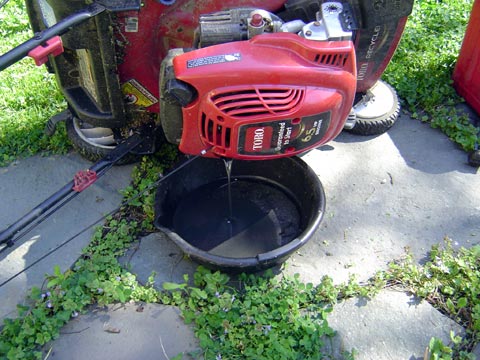
Locate the oil drain plug and place a flat pan underneath to catch the oil.

Remove the oil plug and allow all of the oil to drain out

Replace the drain plug

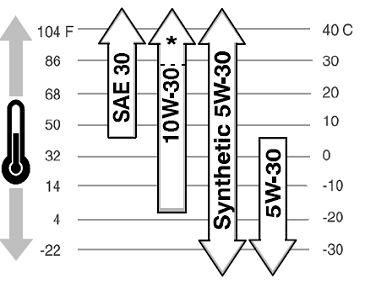
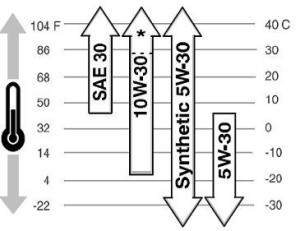
Pour the recommended oil into the appropriate intake for oil on your engine

Fill to the recommended level

Reconnect the spark plug and run the engine for a few minutes to circulate the oil

Shut the engine off, check the oil level once again and adjust the oil level appropriately

These step by step lawn mower maintenance  procedures only take 10 to 20 minutes, will add years to your lawn mower engine life, and save you hundreds of dollars.

Sharpen Your Lawn Mower Blade

While you are changing the oil as part of your regular annual lawn mower maintenance routine, another excellent step to take is to sharpen your lawn mower blade as well.  You will need to actually remove your lawn mower’s blade from the engine shaft. Again follow the step by step guidelines in your manual and always make sure that the spark plug wire is disconnected before doing any of this work.

Once you have the blade off of your lawn mower, use a flat file to sharpen the blade. You will see immediate results once you perform this function. Your old dull blade will rip the grass apart leaving jagged edges to the blades, while a sharp blade will actually cut the grass leaving a nice straight cut. If you have thick grass, your engine will not have to work quite as hard as well.

Dealing with Small Engine Repair Shops

If you are at all uncomfortable with doing this kind of work yourself, or perhaps do not have the tools to perform basic levels of lawn mower maintenance on your lawn mower, you can always take your lawn mower into a small engine repair shop.

These shops repair all types of small engines, including lawn mowers, snow blowers, weed whackers and any other types of small engines that consumers use around the yard.

Many will have a standard charge for oil changes and blade sharpening. It is a good idea to go in early in the season if you would like your lawn mower worked on in time for the spring lawn cutting season. These guys get pretty busy at the beginning of the season, when consumers go to start their lawn mowers the first time and encounter difficulty in starting their engines. They rush to the small engine repair shops along with everyone else and find they have to wait their turn.

If you can drop your lawn mower off in the fall after the season has ended, and before the snow comes, this may be another excellent time to arrange for basic maintenance to be completed. You can also request that all other aspects be checked as well. For example, the carburetor can be cleansed, gaskets replaced, new spark plug installed and all systems checked to confirm it is ready for the next season.

Of course this all costs money and it becomes a trade off between paying for maintenance or repairs vs. purchasing a new lawn mower. I have maintained my own lawnmower for years and it is currently hitting the 30 year mark and still running well.

Clean Lawn Mower Housing

Another basic maintenance activity keep the housing clean. Both the outside surface as well as the housing underneath. The grass can collect both on top as well as underneath and if it is moist at all can slowly over time eat away at the housing. Additionally, ( this actually happened to me) if grass builds up close to the exhaust, it can start to smoke or even start on fire. My lawn mower was smoking and I could not figure out why. I thought initially it had blown the piston ring and was burning oil. Actually grass had caught fire and was smoldering, creating a lot of blue smoke. So keep the housing clean and free of grass!!!

AddThis Social Bookmark Button


Web Content Development